
Whey Protein Isolate vs Concentrate (and Pea Protein): What’s the Difference—and Why the Environment Matters
Protein supplements are everywhere—but not all protein is created equal. If you’ve ever looked at a label and wondered whether whey isolate or whey concentrate actually matters, the answer is: it depends on your body, your goals, and how the protein is produced. At Passion for Fitness, we keep it practical: supplements should support training—not create digestive problems, inflammation, or guesswork.Whey Concentrate: Closer to Whole Food
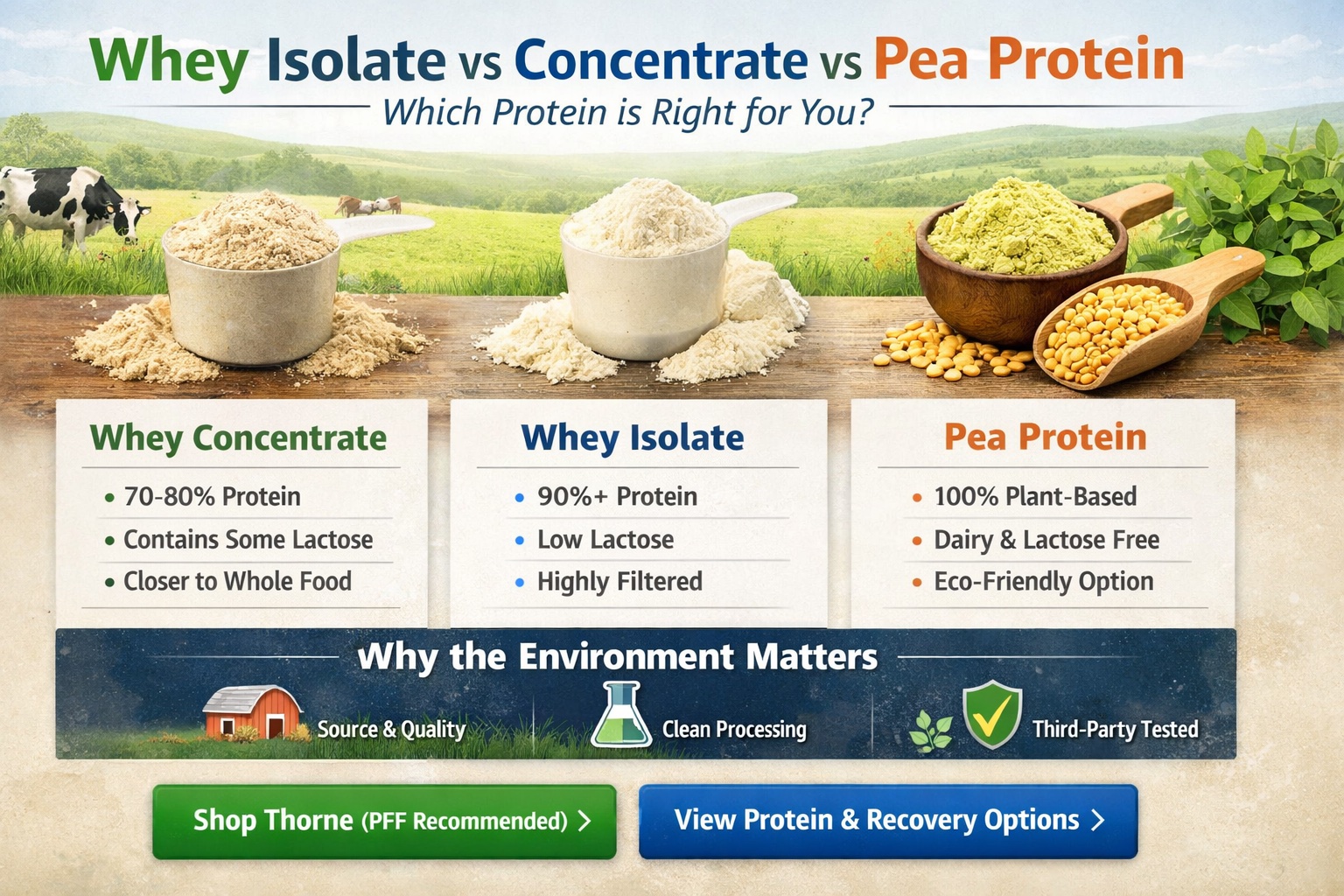
Whey concentrate is typically 70–80% protein, with the rest coming from naturally occurring fats and lactose.Pros
- Less processed overall
- Often retains more naturally occurring compounds found in whey
- Usually more cost-effective
- Great choice if you tolerate dairy well
Cons
- Contains more lactose (can bother sensitive stomachs)
- Slightly less protein per scoop
Whey Isolate: Filtered for Precision
Whey isolate is filtered further to reach 90%+ protein, with most fats and lactose removed.Pros
- Higher protein density per serving
- Very low lactose—often easier to digest
- Helpful during fat-loss phases or calorie control
Cons
- More processing (quality depends on the brand and filtration)
- Often more expensive
What About Pea Protein?
Pea protein is a plant-based option made from yellow split peas. It’s a strong alternative for people who avoid dairy, want a plant-based approach, or care about environmental impact.Pros
- Naturally dairy-free and lactose-free
- Often easier on digestion for sensitive clients
- Plant-based option with generally lower environmental impact
- Can support recovery and daily protein goals when used consistently
Cons
- Typically lower in leucine than whey (a key trigger for muscle-building signals)
- Amino acid profile may be less complete unless paired with other proteins
- Texture/taste varies widely by brand (some add gums/sweeteners)
Coach’s note: If you use pea protein for muscle gain, you may need a slightly higher total protein intake (or a blended plant protein) to match the “punch” of whey.
Why the Environment Matters More Than the Label
Here’s the part most people skip: “isolate vs concentrate vs pea” is only half the story. The bigger issue is how the product is sourced, processed, and tested. Environment matters because it influences quality and tolerability—especially for adults over 40 who are trying to reduce inflammation, improve recovery, and stay consistent.What to look for
- Transparent sourcing (know where ingredients come from)
- Clean processing (avoid vague “proprietary blends”)
- Minimal additives (especially if digestion is an issue)
- Third-party testing (quality + safety are non-negotiable)
Practical Recommendation
Ask yourself one question before buying:Does this support my recovery—or just hit a number on a label?
style="display:inline-flex; align-items:center; justify-content:center; padding:12px 16px; border-radius:14px; font-weight:700; text-decoration:none; line-height:1; background:#8BC53F; color:#111827; border:1px solid rgba(17,24,39,.10); box-shadow:0 10px 24px rgba(17,24,39,.10);">
Shop Thorne (PFF Recommended)
style="display:inline-flex; align-items:center; justify-content:center; padding:12px 16px; border-radius:14px; font-weight:700; text-decoration:none; line-height:1; background:#1476BC; color:#ffffff; border:1px solid rgba(255,255,255,.22); box-shadow:0 10px 24px rgba(17,24,39,.10);">
View Protein & Recovery Options
Quick Cheat Sheet
- Whey Concentrate: best “everyday” pick if dairy sits well
- Whey Isolate: cleaner/lower lactose—best for sensitivity or cutting
- Pea Protein: dairy-free + more eco-friendly—best for plant-based or dairy intolerance
If you want this dialed in precisely, we can also match protein choice to your training phase (fat loss, strength gain, or maintenance) and your digestion tolerance.